Skip to content
Char Dham Yatra Ex Haridwar–Dehradun | चारधाम यात्रा
India · Char Dham Yatra

Char Dham Yatra Ex Haridwar–Dehradun | चारधाम यात्रा

Duration 11 days
Trip grade Contact us
Maximum altitude On request
Starts from ₹ 22,000 per person
Indian Standard
Char Dham Yatra Haridwar–Dehradun
THE EXPERIENCE

Trip Overview

Group size 1–20
Journey Haridwar or Dehradun → Haridwar

Char Dham Yatra | चारधाम यात्रा

Visit Yamunotri, Gangotri, Kedarnath and Badrinath from Haridwar or Dehradun, with a choice of trekking or helicopter travel for Kedarnath darshan. This Uttarakhand pilgrimage also covers three Divya Desams dedicated to Lord Vishnu and the Panch Prayag.

Standard package · 10 nights / 11 days.

Standard package price per person
TravelerPrice
Nepali nationalNPR 32,000
Indian nationalINR 22,000
NRI or foreign nationalUSD 550
Accommodation
Twin-sharing accommodation
Transportation
Private air-conditioned car for transfers and sightseeing
Meals
Breakfast and dinner as listed in the itinerary
DAY BY DAY

Tour Itinerary

DAY 1 Haridwar or Dehradun to Barkot

After pickup at your railway station, airport or hotel in Haridwar or Dehradun, drive 210 km to Barkot via Mussoorie. Visit Kempty Falls en route, then check in for dinner and an overnight stay.

Barkot Weather - Generally pleasant in summer, the temperature ranges from 25-30 degree Celsius, Winter: The Days are pleasantly cool but the nights are cold, temperature ranges from 10 deg to 05 deg.

Meals
Breakfast and dinner
Accommodation
Hotel in Barkot
Travel time
6–7 hours
DAY 2 Barkot to Yamunotri and back

Depart at 5:00 am for the 42 km drive to Janki Chatti or Phool Chatti. Trek 6 km to Yamunotri or hire a horse or doli at your own expense. Visit Jamunabai Kund for a ritual bath and have darshan at Yamunotri Temple. Trek back to Janki Chatti and drive to Barkot for dinner and the night.

Yamunotri Temple - Maharani Gularia of Jaipur built the temple in the 19th Century. It was destroyed twice in the present century and rebuilt again. At Yamunotri, one can cook rice by packing it in a cloth and dipping it in the hot water of the Tapt kund. Pilgrims take this cooked rice home as "Prasad". Here near the temple "Pooja" can be offered to Divya Shila.

Surya Kund - There are a Number of thermal springs near temple, which flows into numerous pools. The most important of these is Surya Kund.

Divya Shila - A rock pillar, worshipped before entering the Yamunotri Temple.

Yamunotri Weather - In summer the maximum temp is 18 degrees and the minimum is 10 degrees Celsius. The days are pleasantly cool but the nights are cold.

Meals
Breakfast and dinner
Accommodation
Barkot
DAY 3 Barkot to Uttarkashi

After breakfast, check out between 9:00 and 10:00 am and drive 100 km to Uttarkashi. Check in at the hotel. Visit Kashi Vishwanath Temple and Uttarkashi Market in the evening, then return for dinner.

Uttarkashi - is home to a number of ashrams, temples. The name of the town reflects its similarity to and location (as north of) the city of Kashi (Varanasi). Similar to Varanasi, town of Uttarkashi is also situated on the banks of River Ganga (Bhagirathi).

Vishwanath temple - Vishwanath temple is one of the oldest Shiva temples in Northern India. Re-constructed in 1857 by Maharani Khaneti Devi of Tehri State in the ancient architectural style. It is situated at the heart of the town. A massive iron trident, symbolic of divine mother’s, is erected and worshiped from time immemorial at the temple complex. Ganeshji, Sakshi Gopal, Markandeya Rishi’s small shrines are also part of the temple complex. AkhandJyoti as well as Akhand Abhishek, special Aarti at morning and evening are offered. As per SkundaPuran, Uttarkashi is known as ‘Saumya Varanasi’, the abode of Lord Shiva in Kaliyug and counted as one of the twelve Jyotirlingas.

Shakti temple - Right in front of the Vishwanath temple is Shakti temple. It has a big ‘Trishul’ of about 6 meters in height and a circumference of 90 cms. at bottom. Though there are different views about the making of this, the upper part of it seems to be made up of iron and the lower one is of copper. As per the epics this Shakti was thrown on the devils by the Goddess Durga (Shakti), hence it gets its name. Since then this Shakti has stood here.

Uttarkashi Weather - Generally hot in summer, the temperature ranges from 30-35 degree Celsius but nights are pleasant, Cold in winters.

Meals
Breakfast and dinner
Accommodation
Hotel in Uttarkashi
Travel time
5–6 hours
DAY 4 Uttarkashi to Gangotri and back

Leave at 5:00 am for Gangotri (100 km each way). Stop at Gangnani for an optional holy dip at Tapt Kund, then continue through the deodar forests and mountains of Harsil Valley. At Gangotri, pilgrims may bathe in the Bhagirathi, perform puja and have darshan. Rest before returning to Uttarkashi for dinner.

Gangotri Temple - The temple was constructed by the Gorkha General Amar Singh Thapa in the 18th Century on the right bank of river Bhagirathi.

Gangotri Weather - The maximum temperature during summer can go up to 20° Celsius. Summer nights can get cooler with a minimum temperature of 10° Celsius. Light woolen clothes are required while visiting Gangotri during summer. Winter season is very chilly in Gangotri. Gangotri will be covered in sheets of snow during winter. Pilgrimage centres remain closed throughout winter due to heavy snow falls.

Meals
Breakfast and dinner
Accommodation
Uttarkashi
Travel time
3–4 hours each way
DAY 5 Uttarkashi to Sitapur via Guptakashi

After breakfast, leave around 8:00 am for the 230 km drive to Sitapur via Moolgarh and Lambgaon. At Tilwara, follow the Mandakini River from the direction of Kedarnath towards Guptakashi. Visit Ardhanarishwar Temple before checking in at Sitapur for dinner.

Guptakashi - The name Gupt Kashi means "Hidden Benares. Mythology describes how the Pandava brothers were searching for a glimpse of Shiva, Shivji first concealed himself at Guptkashi, but later fled from there further up the valley to Kedarnath, where the Pandavas finally got their wish fulfilled. There are more tangible connections as well-the Kedarnath pandas (priests) live in Guptkashi during the winter months, and after the Kedarnath temple closes for the winter, the image of Kedarnath passes through Gupt Kashi on its way to Ukhimath (across the valley), where it stays for the winter.

Guptkashi Weather - Pleasant in summer, the temperature ranges from 25-30 degree Celsius. Cold in Winter

Meals
Breakfast and dinner
Accommodation
Hotel in Sitapur
Travel time
9–10 hours
DAY 6 Sitapur to Kedarnath by helicopter or on foot

Helicopter option. After breakfast, drive to the helipad at Guptakashi, Phata or Sersi at the time specified by the helicopter company. Fly approximately 15 minutes to Kedarnath for darshan and puja.

Trekking option. Check out at 3:00 am and drive to Sonprayag. Take the government jeep 6 km to Gaurikund (fare listed: INR 10), then trek 19 km, approximately eight hours, to Kedarnath for darshan and puja.

For either option, stay overnight at Kedarnath or return to Sitapur.

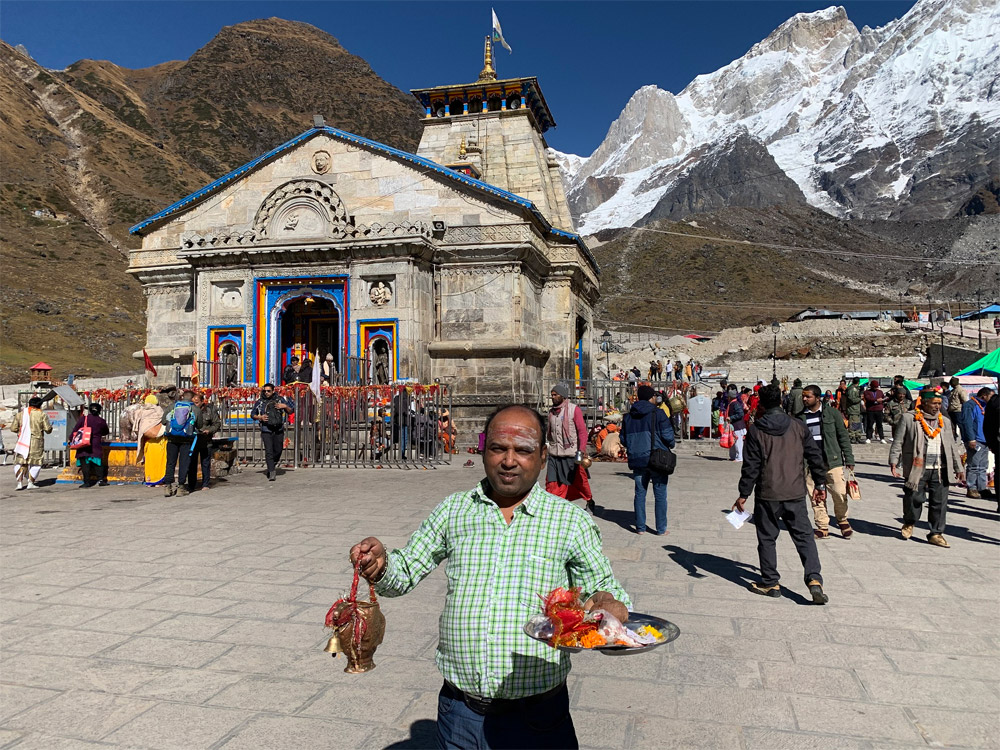
Kedarnath - The Kedarnath shrine, one of the 12 jyotirlingas of Lord Shiva, is a scenic spot situated, against the backdrop of the majestic Kedarnath range. Kedar is another name of Lord Shiva. According to legend, the Pandavas after having won over the Kaurava in the Kurukshetra war, felt guilty of having killed their own brothers and sought the blessings of Lord Shiva for redemption. He eluded them repeatedly and while fleeing took refuge at Kedarnath in the form of a bull. On being followed he dived into the ground, leaving his hump on the surface. The remaining portions of Lord Shiva appeared at four other places and are worshipped there as his manifestations. The arms appeared at Tungnath, the face at Rudranath, the belly at Madhyamaheshwar and his locks (hair) with head at Kalpeshwar. Kedarnath and the four above- mentioned shrines are treated as PanchKedar.

Kedarnath Weather - Due to its high altitude the weather in Kedarnath remains cold for most part of the year. Summer here is cool and pleasant while winter is severe cold. During summer season the temperature varies around 20°Celsius. Light woolen wear is recommended. Winter season in Kedarnath is severe with mercury falling to as low as 0°Celsius. During this time the place experiences snowfall as well. Due to the extreme climatic conditions, this time is usually avoided by tourists.

Meals
Breakfast
Accommodation
Kedarnath or Sitapur
Travel time
15-minute flight (helicopter option)
Walking / trekking
8 hours (trekking option)
DAY 7 Kedarnath to Sitapur or Govindghat

After a night at Kedarnath, returning by helicopter. Report to the helipad early, return to Sitapur and continue 170 km to Govindghat via Ukhimath, the winter seat of Kedarnath. Check in at Govindghat.

After a night at Sitapur. Check out after breakfast and drive 170 km to Govindghat via Ukhimath. Stay overnight in Govindghat.

Returning on foot. Trek down to Gaurikund in the morning and drive to Sitapur for the night.

Ukhimath - is small town located in Rudraprayag district. Ukhimath was the land where the wedding of Usha and Anirudh, grandson of Lord Krishna was solemnized. It is also a famous pilgrimage center and known for its ancient temples dedicated to Usha, Lord Shiva, Goddess Parvati, Aniruddha and Mandhata. UtsavDoli of Lord Kedarnath and Madhyamaheswar are brought to Ukhimath during winter and worshiped for six months. The temple also holds year round pujas of Lord Omkareshwar. Situated on the road connecting Guptkashi with Gopeshwar, the holy town is mainly inhabited by the priests of Kedarnath temple known as Rawals.

Meals
Dinner
Accommodation
Govindghat or Sitapur, depending on the route
Travel time
7-hour drive to Govindghat (Options 1 and 2)
DAY 8 Govindghat or Sitapur to Badrinath

From Govindghat. After breakfast, check out and drive 30 km to Badrinath.

From Sitapur following the trek. Check out in the morning and drive 180 km to Badrinath, visiting Ukhimath en route.

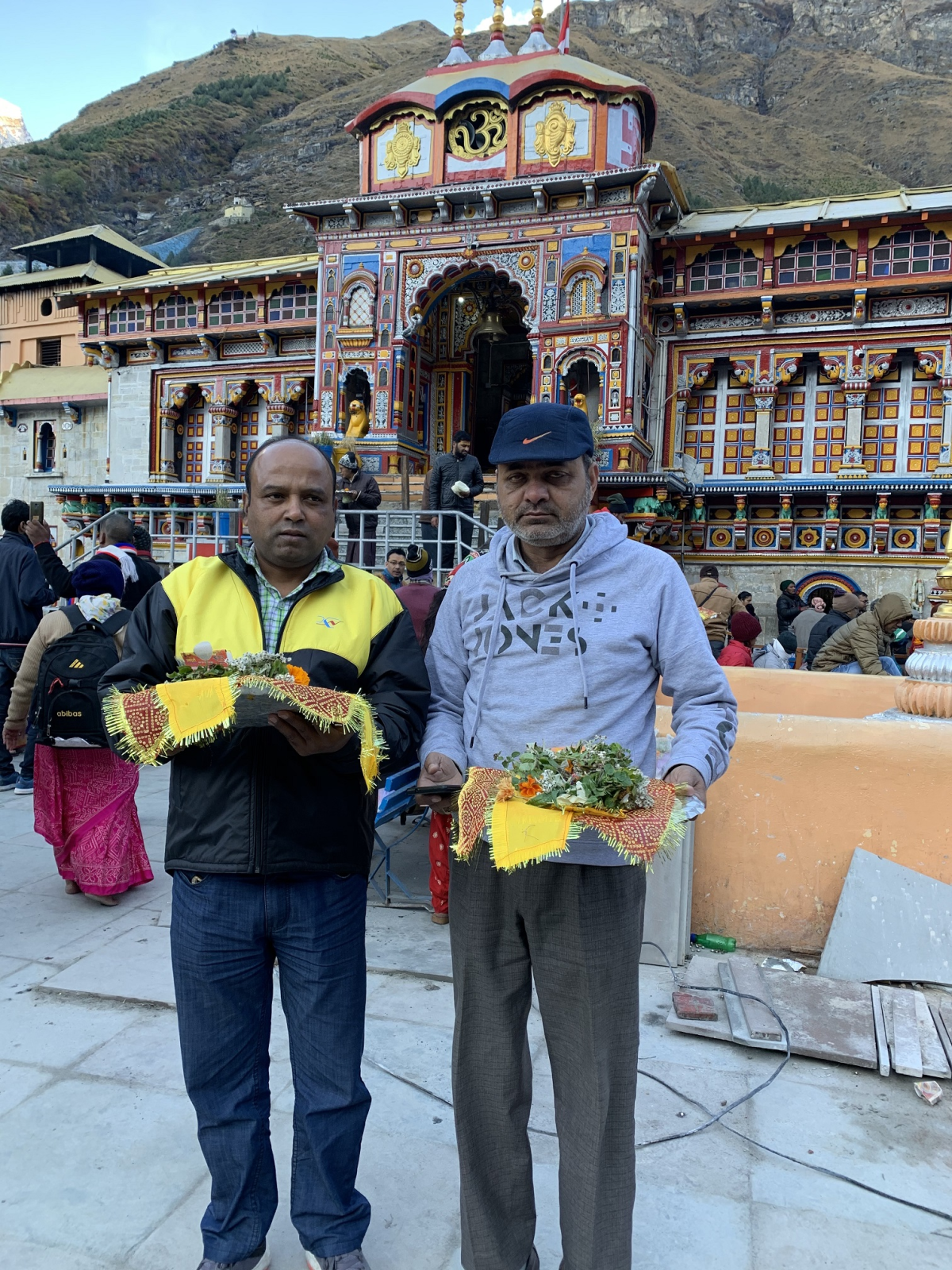
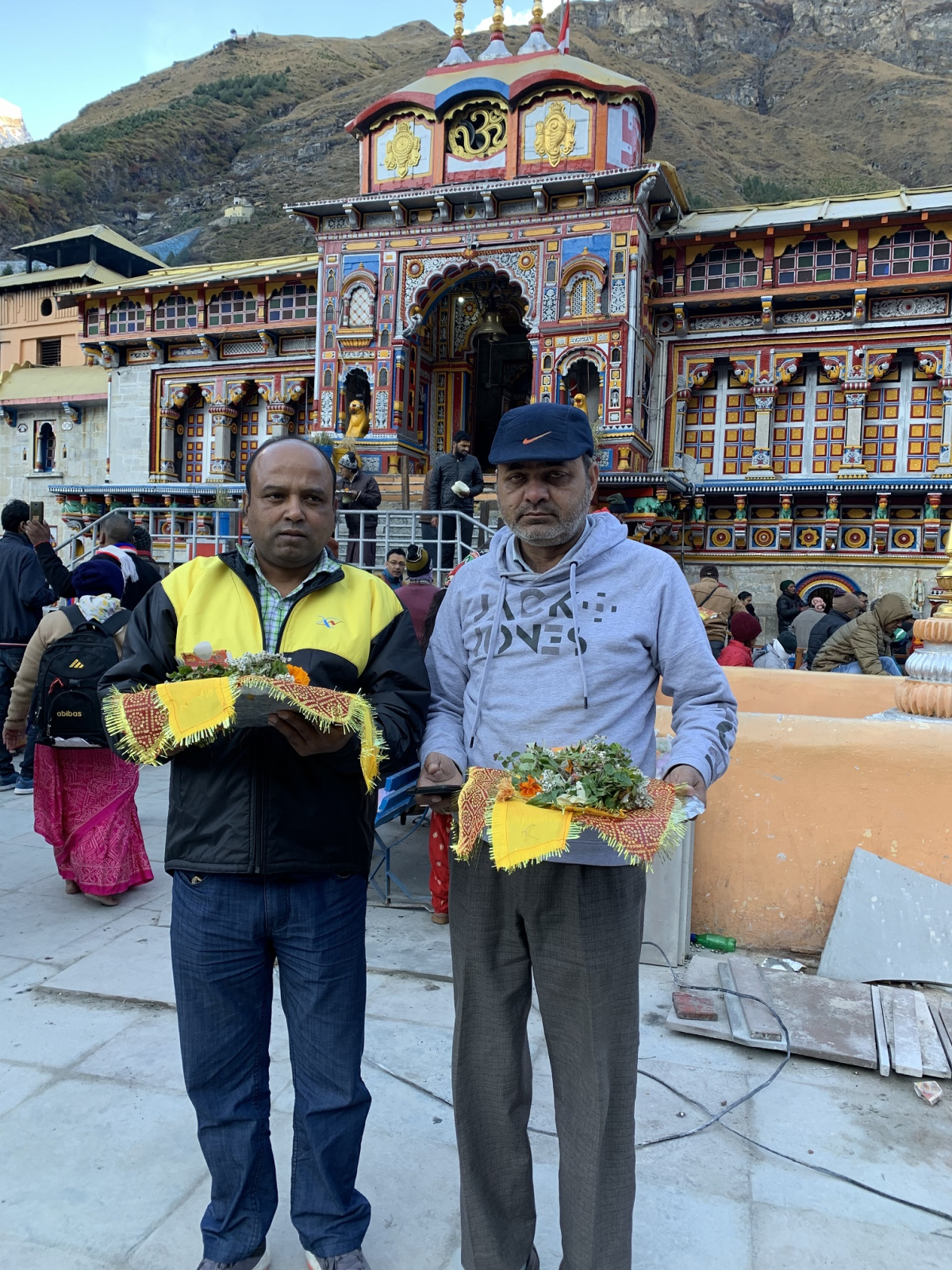
On either route, visit Tapt Kund, have darshan of Badrivishal and attend the evening aarti. Brahma Kapal is a place for pind daan and shraddha for ancestors. Nearby sights include Mana, Vyas Gufa, Mata Murti, Charan Paduka, Bhimkund and the Saraswati River, described in the itinerary as within 3 km of Badrinath. Dinner and overnight stay in Badrinath.

Badrinath - one of the Ancient Four Dhams is one of the most celebrated pilgrimage spots of the country and is situated at an elevation of 3300 meters, guarded on either side by the two mountain ranges known as Nar & Narayan with the towering Neelkanth Peak providing a splendid backdrop. This revered spot was once carpeted with wild berries. Thus, the place got the name "Badri van", meaning forest of berries.

Tapt Kund - Natural thermal springs on the bank of the river Alaknanda, where it is customary to bathe before entering the Badrinath temple.

Mana Village - Inhabited by an Indo-Mongolian tribe, it is the last Indian village before Tibet. Vasundhara - As the name suggests, vasundhara is a magnificent water fall. This place is 5 km from Badrinath out of which 2 Kms. is motorable up to Mana village.

BhimPul - On the other side of Mana village, a massive rock forming a natural bridge, lies over the roaring Saraswati river. It presents a spectacular view of water thundering down through the narrow passage under the rock and is believed to have been placed there by Bhim, thesecond eldest among the five Pandava brothers.

Vyas Gufa (cave) - Near Mana Village, this is a rock-cave where Ved Vyas is believed to have composed the Mahabharata and the pauranic commentaries.

Badrinath Weather - The average maximum temperature will be around 18° Celsius and the average minimum is 8° Celsius. Warm and woolen clothes are hence required for a stay inBadrinath throughout the year. Winter in Badrinath is often accompanied by snow falls. Winter is very chilly with an average temperature of 5° Celsius. Due to the extreme climatic conditions, this time is usually closed for tourists.

Meals
Breakfast and dinner
Accommodation
Badrinath
Travel time
2–3 hours from Govindghat or 8–9 hours from Sitapur
DAY 9 Badrinath to Rudraprayag or Srinagar

After darshan and breakfast, drive 160 km via Joshimath to Rudraprayag or Srinagar. Visit Narsingh Temple, the winter seat of Badrinath, followed by Nandprayag and Karnaprayag. Check in at the hotel for dinner and the night.

Joshimath - is situated on the slopes above the confluence of the rivers Alaknanda and Dhauliganga. Of the four 'Maths' established by Adi Shankaracharya, Joshimath is the winter seat of Badrinath. The idol is brought down to Joshimath and installed in the temple for people to worship. There are many other temples in the township. The most important is the temple of Narsingh with the idol of Lord Vishnu. The left arm of this deity is getting destroyed with time and the popular belief holds that the day the arm completely withers Badrinath valley will cease to exist and the Gods will transfer the residence into the neighboring Niti Valley at Bhavishya Badri.

Rudraprayag - is one of the PanchPrayag (five confluences) of Alaknanda River. It is confluence of rivers Alaknanda and Mandakini. Kedarnath, a Hindu holy town is located 86 km from Rudraprayag.

Meals
Breakfast and dinner
Accommodation
Hotel in Rudraprayag or Srinagar
Travel time
6–7 hours
DAY 10 Rudraprayag or Srinagar to Haridwar

After breakfast, check out and drive 160 km to Haridwar via Dhari Devi Temple, Devprayag and Rishikesh. The itinerary concludes with drop-off at the guest’s chosen location in Haridwar.

Rishikesh - Named after the Lord Vishnu, Rishikesh is a holy city for Hindus. Located in the foothills of the Himalaya in northern India it is also known as the yoga center of the world and is home to many world renowned ashrams. Rishikesh styles itself as the ‘Yoga Capital of the World’, with masses of ashrams and all kinds of yoga and meditation classes. The fast-flowing Ganges is surrounded by forested hills inside the city. Apart from temples and ashrams Rishikesh is now popular for white-water rafting.

Meals
Breakfast
Travel time
6–7 hours

What's Included & Excluded

What’s included

  • Twin-sharing accommodation throughout the tour.
  • Daily breakfast and dinner.
  • All transfers and sightseeing by private air-conditioned car.
  • Applicable taxes, except the separately listed GST.
  • All required assistance.

What’s excluded

  • Anything not listed under package inclusions.
  • GST of 5%, charged separately.
  • Kathmandu–Delhi–Kathmandu airfare or train fare.
  • Lunch and entrance tickets to temples or monasteries.
  • Costs arising from changes due to bad weather, cancellations, road closures or flight delays.
  • Porters, ponies, horse rides, cable cars, boats and train tickets.
FIND YOUR WAY

The route

Haridwar or Dehradun → Haridwar

A LITTLE CLARITY GOES A LONG WAY

Quick Guide & FAQ

Helpful details for your tour.

01 What is the payment schedule?

Pay 25% at booking and 35% seven days before the journey. Pay the remaining balance on or before the start of the journey. If a helicopter is requested, its charges are payable in full.

02 What is the child pricing policy?
  • Under 5 years: complimentary.
  • Ages 5 to 11 inclusive: 70% of the adult cost.
  • Over 11 years: adult pricing applies.
03 What is the cancellation and refund policy?
  • Cancellation before 60 days: 90% refund.
  • Cancellation before 30 days: 70% refund.
  • Cancellation before 15 days: 50% refund.
  • Cancellation during the final 15 days: no refund.
Let’s talk travel